
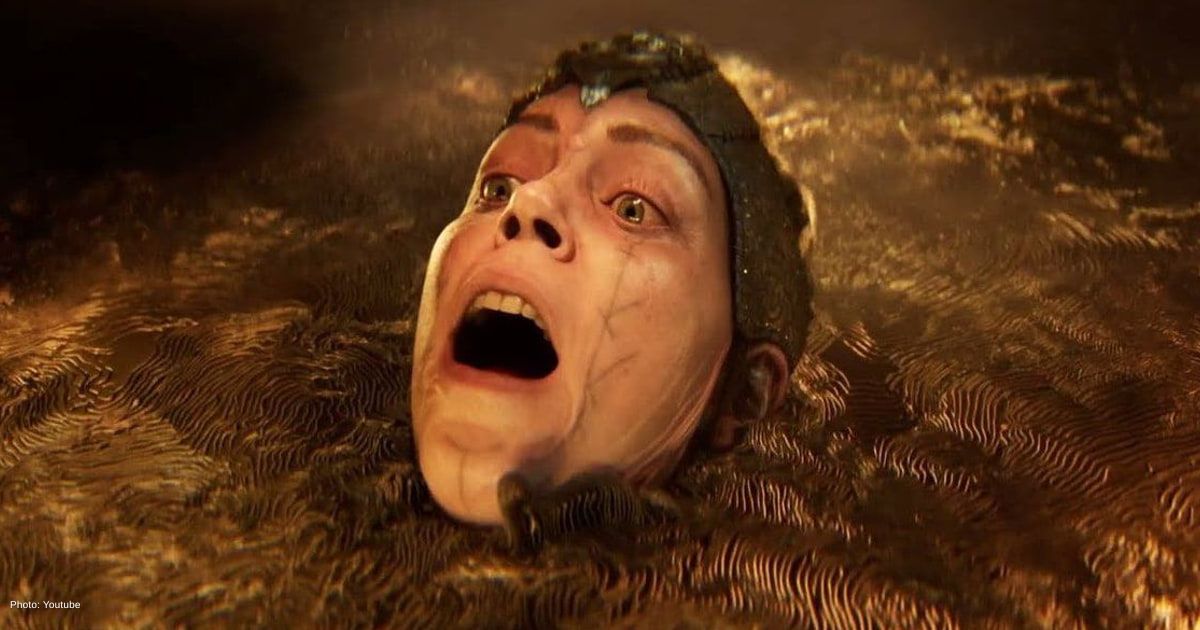
Senua’s New Direction Teases a Darker Action-Adventure Journey
Senua returns like a shadow crossing firelight, familiar yet changed. Revealed at the Xbox Games Showcase 2026, Ninja Theory’s Senua is not framed as Hellblade III but as a standalone action-adventure set inside the Hellblade universe. For gaming and entertainment players tracking the latest game releases, the promise is clear: a darker journey where grief, myth, combat, and memory move through a haunting world, drawing them deeper into Senua’s fractured path.
Key Takeaways
Senua’s new action-adventure game, set within the Hellblade universe, promises a darker, more expansive journey focusing on combat, traversal, and puzzles, driven by the studio’s unified creative focus.
- The game is presented as a standalone action-adventure within the Hellblade universe, shifting focus from a direct sequel to an exploration of Senua’s personal purgatory shaped by her past.
- Combat is being redefined with a balanced approach, incorporating tactical choices, stealth, environmental interactions, and Senua’s unique perception-based abilities, rather than being solely combat-heavy.
- The game world is significantly larger, featuring an interconnected map twice the size of Hellblade II, with enhanced traversal mechanics like climbing and jumping, encouraging exploration within a linear narrative.
A familiar warrior steps into a stranger’s dark
The reveal feels important because it clearly defines Senua’s new direction. Xbox Wire calls Senua an unexpected action-adventure, while Ninja Theory describes a broader experience centered on combat, traversal, and puzzles. That makes the shift feel deliberate rather than random.
The journey still belongs to Senua. Set after both earlier Hellblade games, it places the Celtic warrior in her own vision of purgatory, a realm shaped by childhood memory, homeland, pain, and psychosis. Her goal remains intimate: to reach the afterlife and reunite with lost loved ones.
That emotional center keeps the project from feeling like a reset. In entertainment terms, Senua looks less like a franchise detour and more like a ritual, with the same wounded soul walking through a larger, stranger door toward danger, release, and uneasy spiritual clarity once more.
Combat, exploration, and myth begin to collide
The biggest change is how Senua moves and fights. Ninja Theory says the game is not a combat-heavy spectacle, but a fairly even blend of combat, traversal, and puzzle-solving. That balance sharpens the game development pitch: the atmosphere remains oppressive, while player agency becomes more visible.
Combat now leans on tactical choice. Senua can face multiple enemies, use stealth, exploit vertical spaces, take weapons from the world, dual-wield, throw weapons, and trigger Focus Abilities across battle, traversal, and puzzles. Those perception-based powers let her distort reality, including moments that break spaces open or push enemies back.
The world also grows. Ninja Theory describes a single interconnected map about twice the size of Hellblade II, while still maintaining a linear story rather than open-world sprawl. Faster movement, climbing, jumping, secrets, and revisited spaces suggest discovery without losing pressure.
That is why Senua fits among the latest game releases to watch for 2027: it carries a recognizable soul while addressing gaming trends for richer play, blending cinematic entertainment with modern action-adventure design, especially for international players following 2026 coverage closely.
Why this darker path feels worth watching
Behind the larger world, deeper combat, and mythic atmosphere, the studio’s own journey adds another layer of momentum. Ninja Theory has said all 85 creatives are focused on Senua after Project Mara was set aside, making it the studio’s first full-team project in over 12 years, since DmC: Devil May Cry. For game development, that unity matters because ambition becomes stronger when every part of the studio moves toward the same shadowed destination.
Senua may have been born of pain, but her new direction points toward growth. It shows that gaming can evolve without abandoning its character, and that entertainment can become bolder when it trusts players to feel, fight, explore, and question. If the reveal delivers, Senua will not only continue a saga. It will prove that even in darkness, courage can be rebuilt.

Kanishma Ray
Kanishma Ray is an entertainment and anime content writer, who's known to play a mean violin (decently, that is). She's an engineering student by day and a wordsmith by night, with a knack for crafting engaging and helpful content that her readers love. When she's not busy writing, you can find her nose buried in a book or controller in hand, consuming media like it's her job (oh wait, it is).
View all articlesRelated Articles
View All
Google and Unity Team Up to Let Anyone Create Video Games Using AI Prompts
Creating a video game usually takes programming knowledge, design skills and plenty of time. However, artificial intelligence is beginning to...
Football Manager 27 Unveils a Smarter Interface With Fewer Clicks
Sports Interactive has revealed early details about Football Manager 27’s interface improvements ahead of its November 2026 launch, introducing changes...
Where To Buy Aion 2 Kinah Safely? A Complete Guide
AION 2 has officially arrived, bringing a new generation of MMORPG adventure to players around the world. After years of...