
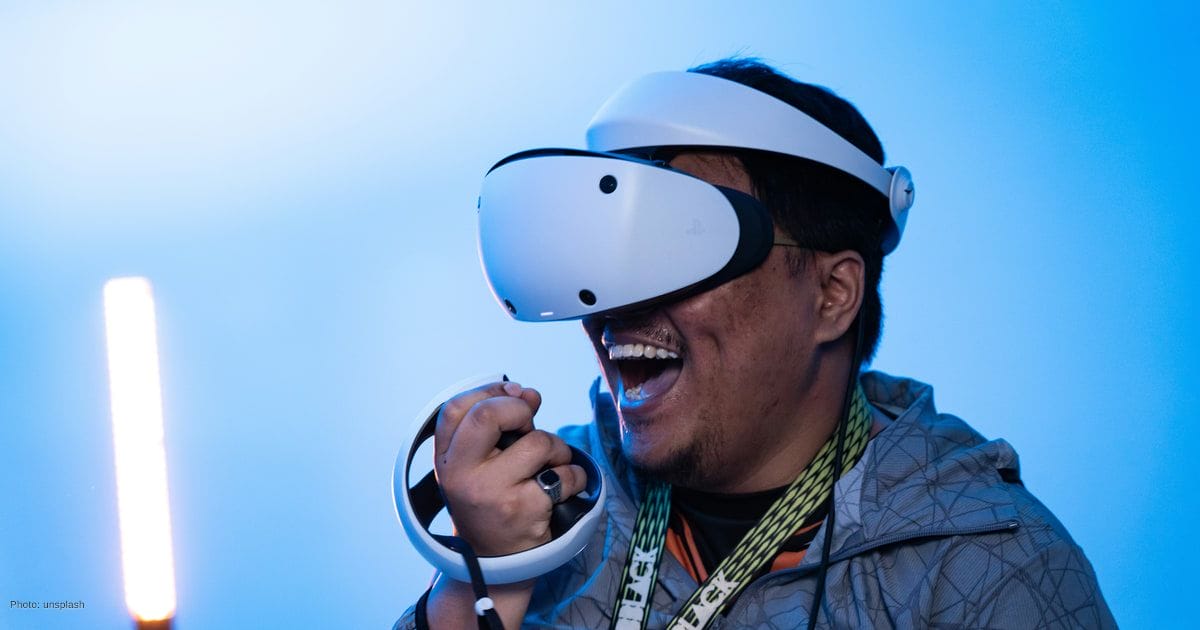
Smoother motion sensing, deeper immersion in games
Motion sensing is no longer a novelty tucked into party games. Across entertainment and gaming, players now swing, duck, and point with a precision that makes the screen feel less like a window and more like a place. The shift matters because modern sensors, smarter tracking, and tighter feedback are turning physical intent into reliable control, which helps immersion without demanding a learning curve or a living-room workout every session.
Key Takeaways
Modern motion sensing technology is enhancing gaming experiences by providing more precise and immersive interactions, reducing the learning curve, and integrating seamlessly with traditional controls.
- Modern sensors and software combine to provide more accurate and responsive motion sensing, making game interactions feel more anchored and natural.
- New systems utilize multiple sensing technologies to reduce latency and improve stability, enhancing the overall gaming experience.
- Motion sensing is evolving to support mixed reality, enabling more intuitive interactions with digital objects in real environments.
When movement stops feeling like input
The “click” moment is easy to spot. A sword arc lands exactly where a wrist expects, a racing line follows a shoulder lean, and the brain stops translating buttons into actions. Compared with the old waggle era, the motion feels anchored, not guessed at today.
That leap is showing up everywhere, from gyro aim on Nintendo Switch Joy-Con and the PlayStation DualSense to full-room VR on headsets like Meta Quest and PlayStation VR2. In a growing number of shooters, a subtle tilt cleans up fine aiming without stealing the thumbsticks.
Even fitness-driven experiences such as Ring Fit Adventure prove the point. When motion reads cleanly, effort becomes play, posture cues make sense, and sessions stay comfortable. The controller fades, leaving presence, rhythm, and the quiet thrill of being in the scene.
Why is it better now
Today’s systems blend multiple senses. Tiny inertial sensors track acceleration and rotation, while outward-facing cameras map a room and watch hands. Software fuses those signals with visual-inertial tracking, so drift shrinks, latency drops, and movement stays stable. Some headsets add depth sensors, and pose models can smooth brief occlusions when hands slip out of view.
Inside-out tracking also removed the tripod era. Standalone headsets launch in minutes, and controllers use infrared markers or hand tracking to stay “seen.” Add sharper haptics, like the DualSense’s nuanced vibration, and motion starts to feel like touch.
Valve Index Controllers track finger position and pressure, and their strap lets players relax their grip, while PS VR2 Sense adds finger touch detection and trigger effects for more natural, responsive hands. That is why motion gear is back as one of the best gaming accessories.
For game development, the payoff is a cleaner design. With standards such as OpenXR and better toolkits, studios can ship motion aim, melee, and gesture shortcuts without breaking traditional controls. Treated as a layer, motion helps more players reach immersion with less nausea and less setup, and keeps traditional pads welcome for everyone, too.
Where motion goes next
The next wow comes from mixed reality. As headsets and glasses get lighter, motion sensing can pin objects to furniture, turning a coffee table into a board or a hallway into a rhythm lane. Hand tracking, body estimation, and room scanning will make menus disappear, replaced by reach and glance.
Progress needs guardrails. Tracking data can reveal bodies and rooms, so platforms are tightening permissions and leaning on on-device processing. Developers are learning comfort rules, from snap turns to adjustable play spaces. If that balance holds, motion will keep nudging entertainment toward presence while staying simple enough to feel effortless.

Kanishma Ray
Kanishma Ray is an entertainment and anime content writer, who's known to play a mean violin (decently, that is). She's an engineering student by day and a wordsmith by night, with a knack for crafting engaging and helpful content that her readers love. When she's not busy writing, you can find her nose buried in a book or controller in hand, consuming media like it's her job (oh wait, it is).
View all articles