
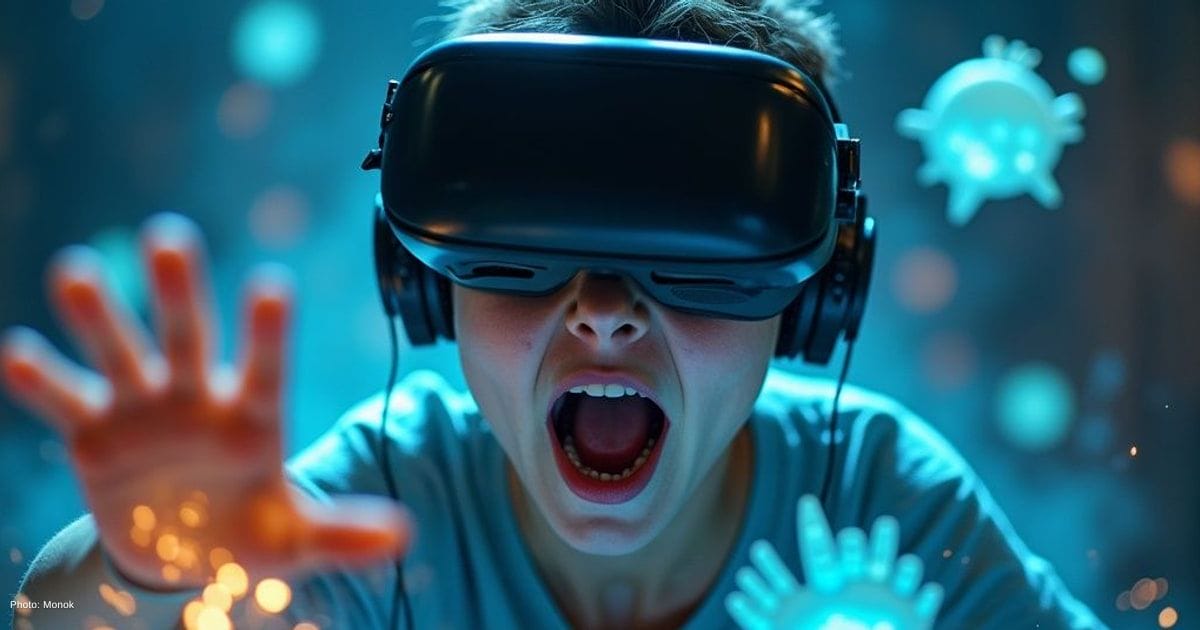
The AR gaming surge that could redefine interactive play
Digital content no longer has to live only inside a screen. Augmented reality makes it possible to place graphics, data, and 3D objects directly into the real world you see around you. Hold up a phone and a virtual chair appears in your living room. Walk through a factory floor and step-by-step instructions hover over equipment. That simple concept has grown into a fast-expanding global market.
The Augmented Reality Market size is projected to be at $125.11 billion in this year to $387.23 billion by 2031, registering a CAGR of 25.35% between 2026 to 2031. What does that kind of growth signal to businesses and investors? What does that kind of growth signal to businesses and investors?
Immersive technology is becoming a core part of business strategy rather than a side experiment. Augmented reality currently leads the space, while virtual reality continues to hold a significant share of the market.
Hardware makes up a large portion of the market, with AR devices leading overall adoption. Why are companies prioritizing devices? Because performance and reliability shape the user experience. Gaming and entertainment remain the biggest areas of use, while manufacturing and healthcare also play major roles.
Key Takeaways
Augmented Reality (AR) is rapidly growing into a multi-billion dollar market, becoming a core part of business strategy with significant applications in gaming, manufacturing, and healthcare.
- The Augmented Reality Market is projected to grow from $125.11 billion in 2023 to $387.23 billion by 2031, indicating substantial business and investment opportunities.
- AR technology is becoming integral to various sectors like gaming, manufacturing, and healthcare, driven by improvements in hardware and smartphone technology.
- AR is evolving beyond entertainment to logistics, healthcare, manufacturing, and education, with businesses recognizing its practical applications in training and visualization.
From early experiments to mainstream use
While AR feels modern, its roots stretch back more than three decades. In 1992, an early system called “Virtual Fixtures” was developed for the U.S. Air Force, marking one of the first practical uses of augmented reality in a real-world setting.
A few years later, NFL broadcasts added the yellow first-down line, showing how digital graphics could appear on live TV. When smartphones became widespread, AR reached everyday users, and tools like LiDAR improved how accurately digital objects fit into real spaces.
Today, AR shows up in everyday experiences. Social media filters adjust faces instantly. Retail apps allow shoppers to preview furniture before buying. Technicians use digital overlays for equipment repairs.
Medical professionals rely on AR for visual guidance during procedures. Students explore interactive 3D science models. Adoption spread quickly because smartphones already provide the basic hardware.
What sets AR, VR, and MR apart
So how does AR differ from virtual reality? Although AR many cofuse AR and VR, Virtual reality works differently. Instead of adding to the physical world, VR replaces it entirely. Headsets, motion tracking, and spatial audio create fully digital environments.
Pilots train in simulators. Surgeons rehearse operations. Game development studios design immersive worlds shaped by new gaming trends. VR delivers deeper immersion, though it requires more expensive equipment and may cause discomfort for some users.
Mixed reality blends both approaches. It allows digital objects to interact with physical ones in real time. As headsets improve in comfort and precision, interest in mixed systems continues to rise, especially in industrial and enterprise settings.
Looking ahead, augmented reality is expanding beyond entertainment into logistics, healthcare, manufacturing, and education. Businesses see it as a practical tool for training, visualization, and collaboration. As connectivity improves and hardware becomes lighter and more powerful, AR is positioning itself as a long-term digital platform woven into daily life rather than a passing tech wave.

Kanishma Ray
Kanishma Ray is an entertainment and anime content writer, who's known to play a mean violin (decently, that is). She's an engineering student by day and a wordsmith by night, with a knack for crafting engaging and helpful content that her readers love. When she's not busy writing, you can find her nose buried in a book or controller in hand, consuming media like it's her job (oh wait, it is).
View all articles