
GameSir’s Nova Vision puts custom controller tuning at your fingertips
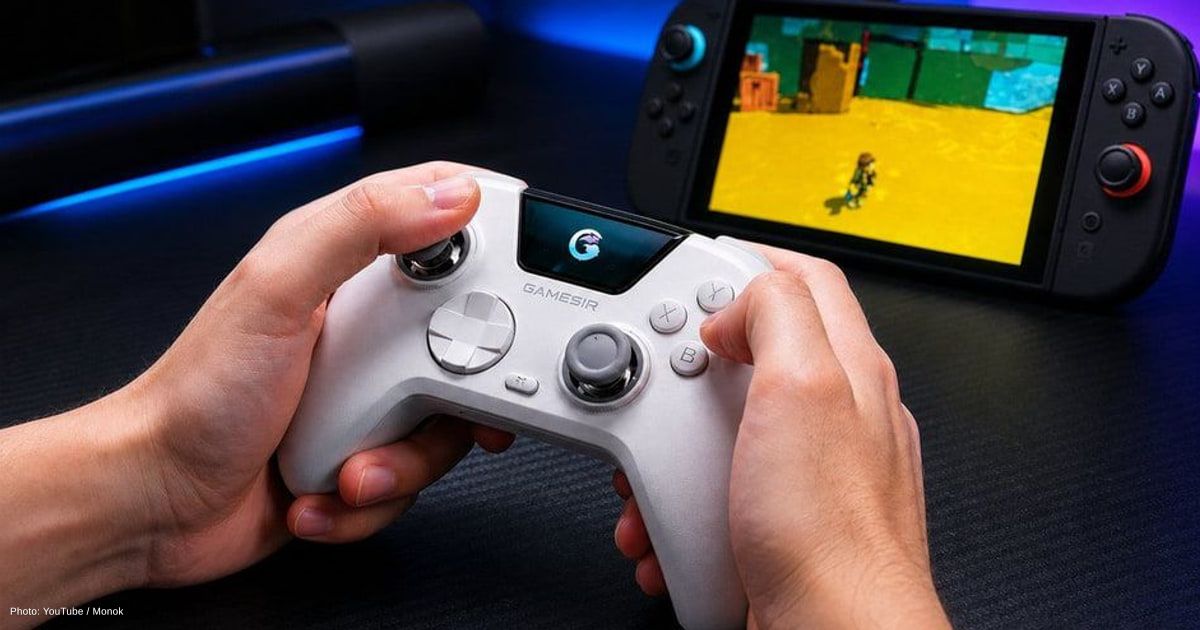
A controller has traditionally been judged by how comfortably it fits the hands and how reliably it translates movement into action. GameSir’s Nova Vision adds another consideration: a built-in color screen. Announced on November 5, 2026, the wireless controller brings key adjustments onto the device, pointing toward a more accessible approach to gaming hardware for different play styles and preferences.
Key Takeaways
GameSir’s Nova Vision controller introduces an integrated color screen for on-device settings adjustments, alongside customizable Hall-effect sticks and dual-mode triggers, aiming for greater accessibility and convenience in gaming hardware.
- The Nova Vision controller features a 0.96-inch LCD screen running Vision OS, allowing users to adjust settings like Hall-effect stick resistance and trigger modes directly on the device, reducing reliance on companion apps.
- The controller offers extensive customization options including adjustable Hall-effect stick resistance, switchable dual-mode triggers, rear buttons, a gyroscope, and vibration motors, with prices starting at $54.99.
- GameSir’s Nova Vision supports multiple platforms (Nintendo Switch, Switch 2, PC, mobile) and connection types (Bluetooth, 2.4GHz, wired), reflecting a broader trend towards accessible customization in gaming peripherals.
A screen puts controller settings within reach
The Nova Vision’s 0.96-inch LCD runs GameSir’s Vision OS, giving players an onboard menu to check battery status and adjust settings without opening a phone app or computer program. The display puts essential options within reach, while custom wallpaper uploads still require GameSir’s companion software.
That interface is only part of the customization story. Hall-effect sticks offer adjustable resistance, with 30gf and 80gf settings for lighter or firmer movement. Dual-mode triggers switch between progressive analog input and a clicky micro-switch action. Two rear buttons, a six-axis gyroscope, and dual asymmetric vibration motors add further control options.
These features give the controller a broad range of adjustments, and its pricing makes that package notable. Standard black and white models are listed at $54.99, while a Nioh 3-themed edition costs $64.99. The combination puts the Nova Vision among the best gaming accessories to watch, although comfort and reliability will require hands-on testing.
Why onboard tuning matters across platforms
The value of an onboard interface becomes clearer when players move between games and devices. Instead of reaching for another screen to change a setting, they can access supported adjustments directly on the controller. That makes customization feel less like a separate task and more like part of play.
GameSir lists compatibility with Nintendo Switch, Switch 2, PC and mobile, alongside Bluetooth, 2.4GHz wireless and wired connections. The controller includes a 1,000mAh battery, a charging dock, motion controls and a polling rate of up to 1,000Hz. These specifications broaden its appeal, although performance and feature support can vary by platform and connection.
Beyond this product, the design reflects wider gaming trends: peripherals are combining physical adjustments with more accessible software. These gaming industry innovations could make personalized controls easier to access, particularly for players who don’t want to manage settings through separate applications. The display gives those options a dedicated home, showing how gaming hardware can support convenience without complicating entertainment.
The future of smarter, customizable controllers
The Nova Vision is scheduled to arrive in November 2026, with the Nioh 3 edition expected in December. Its features are promising, but display quality, menu responsiveness, and everyday performance will determine whether its convenience translates into a better experience. Those details matter more than specifications alone.
The larger opportunity is a controller that adapts to its player without demanding extra effort. As gaming trends favor accessible customization, built-in interfaces may become more familiar in gaming peripherals. GameSir’s approach does not prove every controller needs a screen, but it makes a case for putting useful controls closer to the hands that use them.

Marcus Kade
Marcus Kade is Managing Editor at Spiel Times, covering breaking gaming news with a focus on the industry's business side. When not writing, he's probably losing a co-op game to his partner.
View all articlesRelated Articles
View All
A new N64 cartridge in 2026 is gaming’s boldest indie statement
A brand-new Nintendo 64 game arriving in 2026 sounds like a nostalgic fantasy, yet Xibalba 64 makes it real. Developed...
Unreal Engine 6 just fired Blueprints, and game developers aren’t happy
Imagine spending years building your dream game, only to discover that the tools you’ve relied on are disappearing. That’s the...

Lords of the Fallen II’s 28 Movesets Could Redefine Soulslike Combat
A weapon swap is a small move with big consequences in a Soulslike, where one mistimed action can end a...