
Amelia’s Escape Delivers Clever VR Puzzles, but the Ending Comes Too Soon
Virtual reality and escape rooms have always been a natural combination, giving players physical spaces where almost everything could hide the next clue. Amelia’s Escape entered that corner of gaming this summer with a mysterious laboratory, time travel, and puzzles built around careful observation. However, its intriguing blend of storytelling and problem-solving barely gets going before the adventure is already over.
Key Takeaways
Amelia’s Escape offers clever VR puzzles and an intriguing narrative but is ultimately too short to fully develop its story or justify its price.
- The VR escape room game Amelia’s Escape features clever, non-linear puzzles that encourage careful observation and logical thinking, reminiscent of Myst and I Expect You To Die.
- Despite its engaging puzzle design, the game suffers from rough edges, including bland visuals, unpolished animations, and occasional bugs that may require restarting rooms.
- The most significant drawback is the game’s exceptionally short length, with a full playthrough lasting just over an hour, leaving the promising time-travel narrative underdeveloped and the ending feeling abrupt for its $14.99 price.
Escaping Ron’s workshop
Released on July 23 for Quest and PC VR through Steam, Amelia’s Escape is the debut commercial title from developer Reality Syndrome Symphony. Players take control of Amelia, a young British teenager who likes photography and roller skating but suddenly finds herself caught up in something considerably stranger.
Her journey begins aboard a train before mysterious blue lights and streaks appear around her. Eventually, Amelia arrives inside a bunker-like workshop belonging to Ron, a scientist obsessed with time travel, and escaping his laboratory becomes the central objective.
Ron’s backstory gradually emerges throughout the experience, giving Amelia more to uncover than simply finding her way out. The mysterious setting also provides the foundation for a story that appears to be building toward something much bigger.
Clever puzzles, rough edges
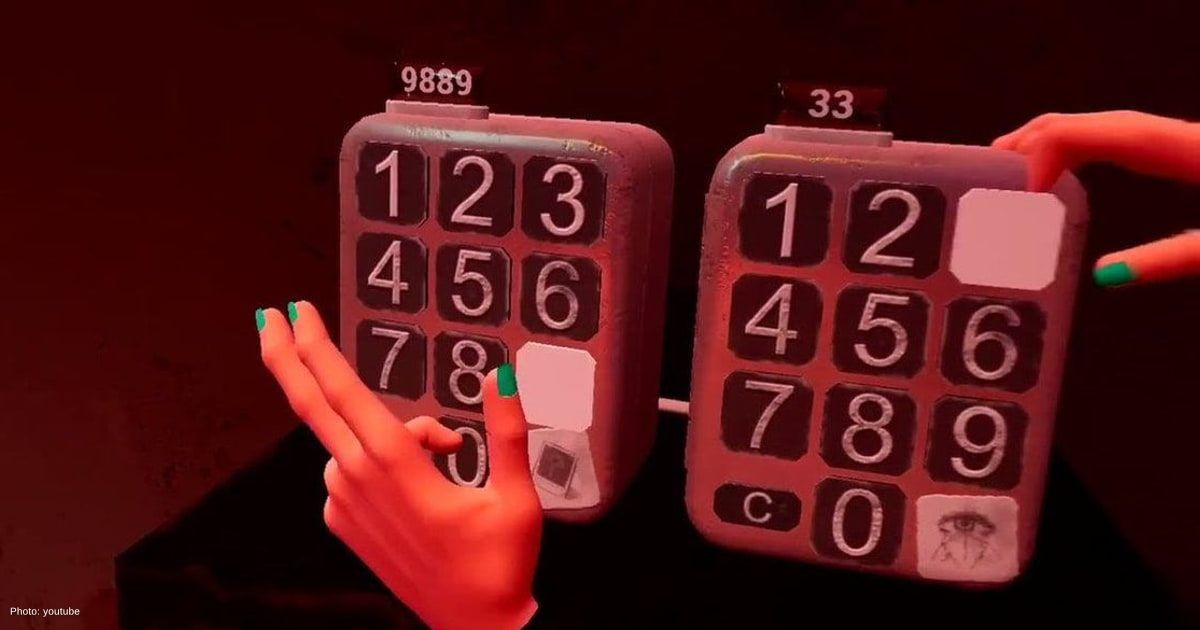
Instead of following a strict sequence, puzzles can be tackled in different orders. Keycards scattered around the room gradually open the way forward, while clues and interactive objects encourage players to examine their surroundings carefully.
Some keycards can be solved within minutes, while the remaining challenges may require much more walking around and working out seemingly obscure connections. Fans of Myst and the I Expect You To Die series should find the approach familiar, with logical thinking playing a major role in the entertainment.
Amelia occasionally provides verbal hints, although she can sometimes reveal a little too much. That freedom to experiment also reflects broader gaming trends, where players are encouraged to discover solutions without being pushed down one fixed route.
Of course, not everything works quite as smoothly. Visuals are relatively bland, hand animations lack polish, and one playthrough even saw a keycard fall through the floor, forcing a complete room reset.
Thankfully, previously discovered solutions make catching up easier, even when some objects and lockboxes appear in different locations after restarting. Such rough edges are particularly notable given that this is Reality Syndrome Symphony’s first commercial project and an early step in its game development journey.
The biggest problem
Length ultimately becomes the game’s main weakness. One complete playthrough lasted just over an hour, leaving little time for the intriguing time-travel narrative to develop into the larger story it appears to promise.
Escape-room runtimes naturally depend on how quickly individual players solve puzzles. Yet the finished experience can still feel surprisingly brief for its current $14.99 price, particularly when the story ends without delivering the payoff its setup seems to be building toward.
That makes Amelia’s Escape an interesting case for game reviews and wider gaming trends. The underlying gaming experience can be clever and enjoyable, but strong puzzles alone may not compensate when the adventure ends just as its story seems ready to begin.

Marcus Kade
Marcus Kade is Managing Editor at Spiel Times, covering breaking gaming news with a focus on the industry's business side. When not writing, he's probably losing a co-op game to his partner.
View all articlesRelated Articles
View All
Gears of War: E-Day’s $500M Cost Rumor Puts Xbox Exclusivity on Trial
A reported half-billion-dollar bill has made Gears of War: E-Day more story than firefights. On October 22, Kotaku cited a...

Mika Games Raises $10M to Fund Tests Mobile Studios Struggle to Run
Mobile game studios face a frustrating funding trap: financiers want proof that players will stick around, yet gathering that proof...

Google’s Free Browser Experiment Hints at the Future of AI Gaming
A racing game that begins as a sentence sounds more like a pitch than a playable project. Google’s Playground is...