
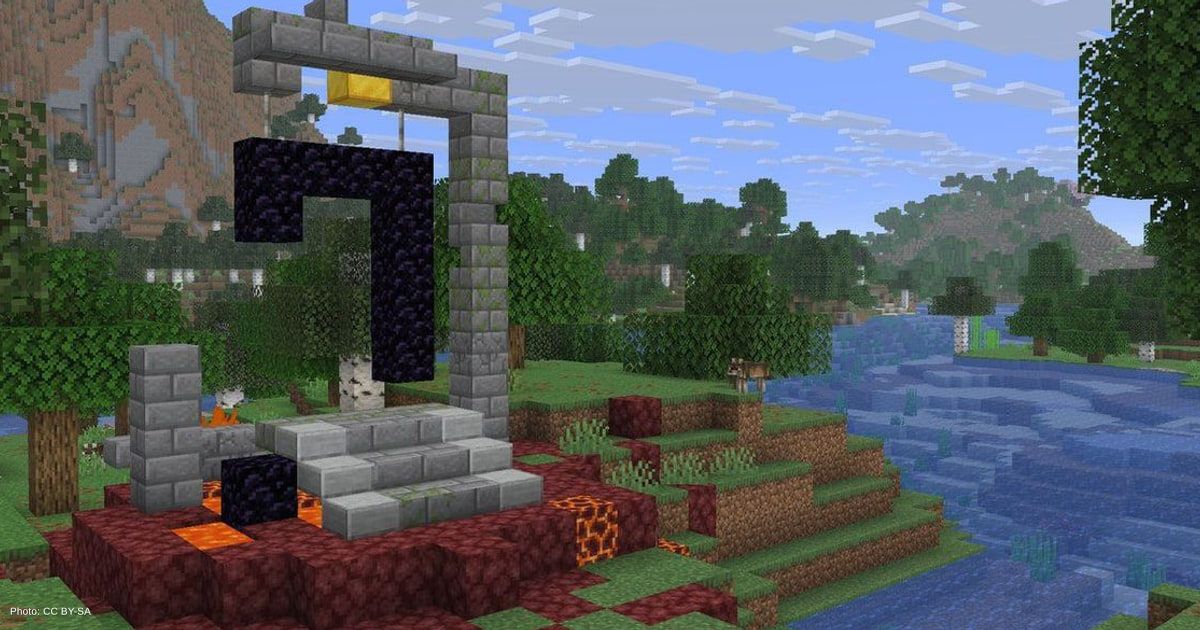
Google DeepMind’s AI Agents Beat Minecraft by Coding for 27 Hours
Most Minecraft players face the Ender Dragon with weapons, armor, and strategy. Google DeepMind’s AI agents brought something different: JavaScript. Over 27 hours and 14 minutes, four agents wrote, executed, and revised programs before defeating the game’s final boss, according to research posted on October 15, 2026. Their route was messy, marked by hundreds of deaths, but it showed how autonomous systems can tackle challenges that refuse to stay simple.
Key Takeaways
Google DeepMind’s AI agents successfully defeated the Ender Dragon in Minecraft by writing and executing JavaScript code over 27 hours, demonstrating autonomous problem-solving and teamwork.
- Four AI agents autonomously wrote and executed JavaScript programs to navigate, mine, craft, and combat their way through Minecraft to defeat the Ender Dragon.
- The AI agents exhibited sustained coordination and teamwork, dividing tasks, sharing information in a common memory, and recovering from setbacks like lost items and program errors.
- This experiment highlights the potential for AI agents to tackle complex, evolving challenges in unpredictable environments through iterative coding and strategic adaptation, though its direct application to game development and human-level skill remains to be seen.
Four AI agents take on Minecraft with code
Researchers placed four Gemini 4 Argon agents in a randomly generated Minecraft survival world on Easy difficulty. Their objective: defeat the Ender Dragon. No human allocated roles, mapped the route, or supplied Minecraft-specific programs, although the agents knew the game from training.
Each agent controlled a character through Mineflayer, a JavaScript library for Minecraft bots. Rather than viewing pixels or pressing keys, they wrote short programs to move, mine, craft, and fight. Feedback about health, inventory, positions, and errors informed their next instructions.
That cycle produced 2,783 programs, 229 team chat messages, and 605 deaths. The agents divided jobs, recorded discoveries in shared memory, and recovered lost supplies for teammates. Among gaming industry innovations, this experiment stood apart because it achieved sustained coordination through code, not a faster speedrun.
How coding carried the team to the end
The first hurdle was gathering supplies. Within two hours, the team had iron tools, diamonds, and a Nether portal. Progress became harder beyond that gateway, where they hunted blaze powder and ender pearls needed to reach the End. When a Ghast destroyed dropped items, the agents discussed the failure and recorded a fix instead of simply repeating the mistake.
Those lessons mattered when the team searched for the stronghold. One agent sampled the flight paths of two Eyes of Ender and calculated their intersection, placing the estimated portal location 43 meters from the room. Then disaster struck: a teammate drowned carrying all twelve Eyes. The team shared coordinates and the deadline, allowing them to recover the items before they disappeared.
Finding the portal began the toughest stretch. The dragon encounter took nearly 14 hours as the agents revised programs and strategies. Around hour 21, one identified the ten crystals healing the dragon. The team discovered how to stack dirt beside the pillars, break each crystal, and dig back down. Thirty-nine minutes after the last crystal fell, an agent landed the winning blow.
Why this 27-hour win matters for gaming
Beyond its entertainment value, the run raises a question for game development: could coding agents help developers test unpredictable game worlds? That possibility remains unproven. Still, the experiment offers insights relevant to gaming industry innovations, showing how AI agents can revise code, divide responsibilities, and recover from setbacks through teamwork.
Those limits matter. This was one Easy-mode run, and Mineflayer exposed information players cannot see. Twenty-two percent of programs ended in errors. It says little about future gaming trends or human-level gaming skill. What stands out is the teamwork: four agents kept checking results, rewriting code, and recovering from setbacks until the dragon fell.

Marcus Kade
Marcus Kade is Managing Editor at Spiel Times, covering breaking gaming news with a focus on the industry's business side. When not writing, he's probably losing a co-op game to his partner.
View all articlesRelated Articles
View All
Google’s Free Browser Experiment Hints at the Future of AI Gaming
A racing game that begins as a sentence sounds more like a pitch than a playable project. Google’s Playground is...
Nintendo Stands by Physical Games as the Industry Shifts to Digital
A game box on a shelf can still represent something special: a collection to revisit and keep. As digital storefronts...
Humble Bundle Offers 26 Steam Games Worth $600 for Just $41 Across Three New Deals
PC players have several new opportunities to expand their game libraries without spending much money. Humble Bundle has introduced three...