

Konami President Questions AI Hype, Says Game Creators Matter Most
Artificial intelligence promises to transform video games, but Konami’s president is questioning whether the technology can deliver everything its supporters predict. In remarks reported on October 15, Hideki Hayakawa argued in Konami’s Integrated Report 2026 that human creators remain essential to innovative games. His perspective challenges a growing assumption across the gaming industry: faster production and smarter tools do not necessarily create better entertainment or more memorable experiences for players.
Key Takeaways
Konami President Hideki Hayakawa emphasizes that human creativity and judgment are more crucial than AI in developing innovative and engaging video games, challenging the industry’s hype around generative AI.
- Konami’s president questions the assumption that generative AI will fundamentally transform game development, arguing that existing tools have already lowered barriers to entry and that AI primarily offers efficiency rather than guaranteed creativity.
- The article highlights a growing skepticism within the game industry regarding AI’s positive impact, with a significant portion of game developers viewing generative AI’s influence negatively and primarily using it for behind-the-scenes tasks like research and coding assistance.
- Konami advocates for a human-centric approach to game development, positioning AI as a tool to support creative teams rather than replace them, stressing that human collaboration and judgment are essential for crafting captivating player experiences.
Why Konami still puts creators first
Hayakawa questions the assumption that generative AI will suddenly make creating games accessible to everyone. He argues that general-purpose engines and user-generated content have already lowered those barriers. AI may expand those possibilities, but he does not expect the technology to transform the market fundamentally.
Even if AI use does lead to improvements in production efficiency, I believe that the most important factors in producing entertaining and innovative video games are people and creators.
Hideki Hayakawa
Hayakawa’s statement draws a clear distinction between efficiency and creativity. AI may help developers work faster, but it cannot guarantee engaging characters, satisfying mechanics, or compelling stories. The tools can support the process; creators still shape the experience.
The difference comes down to creative judgment. Developers test ideas, debate trade-offs, and refine experiences together. That human collaboration helps explain why game development can benefit from new tools without surrendering its direction to them.
How industry concerns add weight to Konami’s AI debate
Hayakawa’s October remarks also illuminate a wider debate about what AI is delivering. The Game Developers Conference’s 2025 survey found 52% of respondents worked at companies using generative AI, while 30% believed it negatively affected the industry. Using the technology and welcoming its influence were not necessarily the same thing.
The GDC report released in January 2026 sharpened that contrast. Of more than 2,300 surveyed professionals, 52% viewed generative AI’s impact negatively, up from 30% in the 2025 survey. Just 7% viewed it positively, although 36% said they used it at work. Changes in respondent groups mean these figures cannot establish a year-over-year trend across the workforce.
Still, uses help explain the apparent contradiction. Among those using generative AI professionally, 81% cited research or brainstorming, 47% code assistance, and 35% prototyping. Asset generation accounted for 19%, while player-facing features reached 5%. These are survey responses, not universal industry rates. But they put gaming trends into focus: AI often assists work behind the scenes. The question for gaming industry innovations is whether those tools produce better player experiences, not merely more content.
Human creativity remains gaming’s greatest strength
That tension leads back to Konami’s position. Hayakawa sees technological change as an opportunity and says the company helps creators understand new tools and their associated risks. Rather than treating gaming industry innovations as substitutes for talent, his approach places technology in service of teams whose choices shape the finished experience.
Konami’s message offers studios a constructive direction for the next phase of game development. AI can accelerate experimentation and reduce work, but software alone cannot decide what makes a world captivating. As the debate continues beyond October, the opportunity is to pair progress with people who can make it meaningful.

Marcus Kade
Marcus Kade is Managing Editor at Spiel Times, covering breaking gaming news with a focus on the industry's business side. When not writing, he's probably losing a co-op game to his partner.
View all articlesRelated Articles
View All
Steam’s Game Releases Hit New High as Indie Developers Fight for Attention
Steam’s expanding catalog gives players more choice, but it also makes it harder to stand out. SteamDB records 21,581 game...

The Simpsons: Hit & Run Comeback Hinted at, but Fans Still Wait
More than two decades after its debut, The Simpsons: Hit & Run still inspires nostalgia among players who remember cruising...
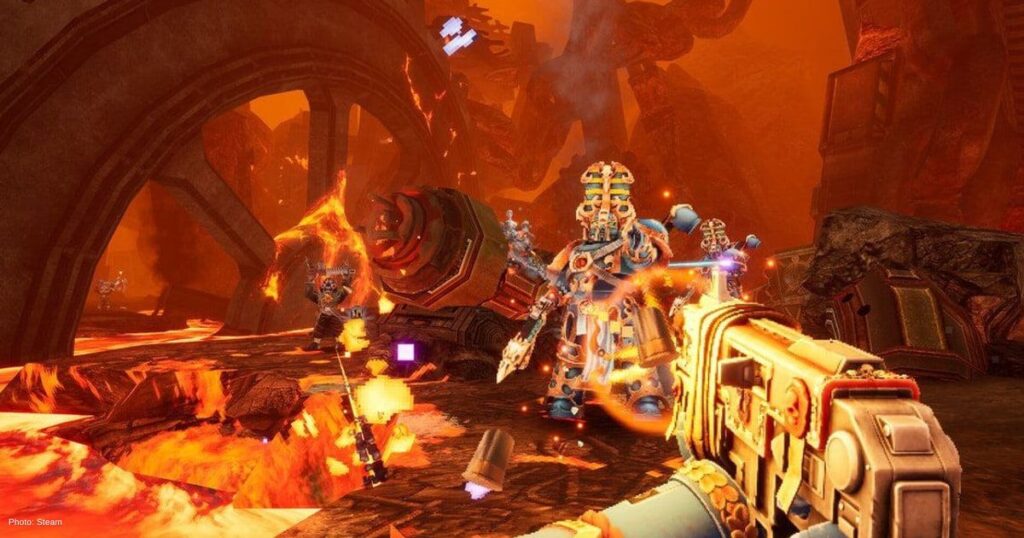
Warhammer 40,000: Boltgun 2 Impresses Critics Despite Several Frustrating Flaws
Warhammer 40,000: Boltgun 2 is receiving positive early reviews following its release, bringing renewed attention to retro-inspired shooters. The sequel...