
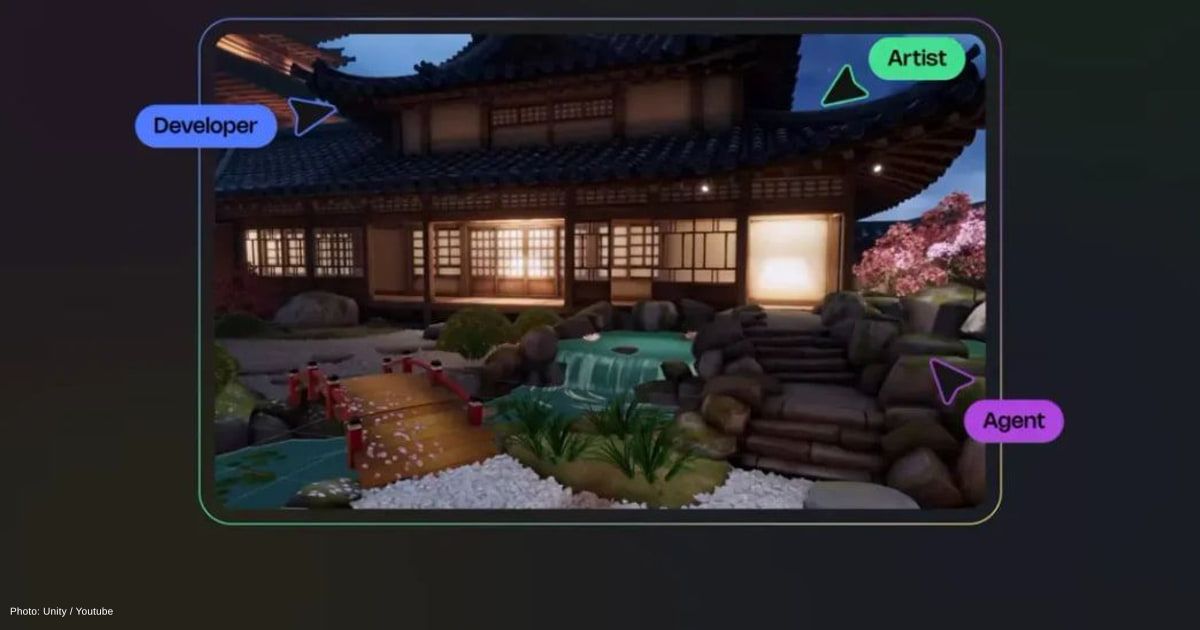
Unity’s $25bn Suitors Could Change Who Controls Gaming’s Future
Unity is at the centre of reported acquisition discussions that could value the game development platform at about $25 billion. Silver Lake and Saudi Arabia’s Public Investment Fund (PIF) have approached the company, Reuters reported on November 5, although no agreement has been reached. The interest reflects growing investor appetite for the technology behind gaming and digital entertainment across an increasingly connected digital economy.
Key Takeaways
Unity, a leading game development platform, is reportedly being pursued by potential buyers valuing it at approximately $25 billion, a move that could significantly reshape the future of the gaming industry.
- Silver Lake and Saudi Arabia’s PIF, investors with existing stakes in the gaming sector, are reportedly in acquisition talks with Unity, highlighting investor interest in gaming technology.
- A change in Unity’s ownership could impact game creators through alterations in pricing, licensing, and product development, as demonstrated by the backlash to its previously proposed Runtime Fee.
- Unity’s technology extends beyond gaming into sectors like film and automotive, suggesting that any acquisition could influence a broader digital content market and industry competition.
The investment power behind Unity’s game engine
The reported approach brings together investors with major gaming interests. Silver Lake owns about 8% of Unity and has a board representative. The firm and PIF joined the $55 billion take-private of Electronic Arts, completed in August 2026. Reuters said the group discussed a Unity valuation of about $25 billion before its latest results lifted its market capitalisation to roughly $21.5 billion.
Unity’s appeal reaches beyond its game engine. Its tools support game development across mobile, PC and console, while its real-time 3D technology serves film, automotive design and interactive media. This reach links gaming and entertainment with a wider digital-content market.
Latest results strengthen the case, but do not guarantee future growth. For the quarter ended September 30, 2026, revenue rose 32% year over year to $622.1 million, and GAAP net income reached $121.6 million. Vector, its advertising product, grew 126%. Unity called it the first GAAP-profitable quarter since its 2020 IPO.
How a takeover could affect game creators
A potential change in ownership could change subscription pricing, licensing terms, technical support and long-term product investment. Unity’s proposed Runtime Fee triggered backlash in 2023, before the company cancelled it for game customers in September 2024. The episode showed how pricing decisions can damage creator trust.
A new owner could fund tools, rendering, reliability, and AI-assisted workflows with a longer investment horizon. Private ownership may ease quarterly market pressure. However, private equity investors also seek returns and efficiency, potentially bringing cost discipline alongside investment. No buyer has disclosed a plan, so predictions about pricing, staffing or product changes would be premature.
Unity’s work in film, automotive visualisation and interactive media connects gaming industry innovations with wider entertainment markets. Its direction could influence competition among platforms as game development grows more complex and gaming trends shift across devices and audiences.
Unity’s next move could transform its industry position
Key questions are whether talks produce a proposal and how Unity’s board responds. Reuters said Unity was working with an investment bank to assess its options. The $25 billion figure is a valuation discussed by potential buyers, not a confirmed offer or agreed purchase price. Talks could change or end without a deal.
Creators and investors will watch pricing, platform support and product development. Unity’s tools underpin modern game development, making trust central to its value. Until the company confirms more, the reported approach remains a major industry development, not a completed takeover.

Marcus Kade
Marcus Kade is Managing Editor at Spiel Times, covering breaking gaming news with a focus on the industry's business side. When not writing, he's probably losing a co-op game to his partner.
View all articlesRelated Articles
View All
A new N64 cartridge in 2026 is gaming’s boldest indie statement
A brand-new Nintendo 64 game arriving in 2026 sounds like a nostalgic fantasy, yet Xibalba 64 makes it real. Developed...
GameSir’s Nova Vision puts custom controller tuning at your fingertips
A controller has traditionally been judged by how comfortably it fits the hands and how reliably it translates movement into...
Unreal Engine 6 just fired Blueprints, and game developers aren’t happy
Imagine spending years building your dream game, only to discover that the tools you’ve relied on are disappearing. That’s the...