
Samsung Breaks the 1,100Hz Barrier With New Odyssey G6 Gaming Monitor
Gaming monitors are entering another speed race, and Samsung is pushing refresh rates further than ever. Its 2027 Odyssey lineup combines record-breaking panels with new OLED options aimed at everything from competitive gaming to immersive single-player experiences.
Yet the biggest number on the spec sheet comes with an important hardware requirement that could limit how many players actually reach it. The announcement also points to broader gaming trends as display makers look beyond resolution and make speed, flexibility and software support bigger selling points.
Key Takeaways
Samsung’s new Odyssey gaming monitors push refresh rates to unprecedented levels, introducing a 1,100Hz display alongside new OLED options and enhanced software features.
- Samsung’s 27-inch Odyssey G6 achieves a record-breaking 1,100Hz refresh rate at 720p, with a Dual Mode offering QHD at 600Hz, though reaching the highest rate requires AI frame generation technology.
- The new Odyssey lineup also features flexible OLED monitors like the 32-inch OLED G8 with Triple Mode (UHD at 360Hz, QHD at 520Hz, Full HD at 680Hz) and larger displays such as the 49-inch OLED G9 and 42-inch OLED G7.
- Samsung is integrating software innovations like HDR10+ GAMING support for over 20 AAA titles in 2027 and Odyssey 3D support for select games, highlighting a trend where display technology and game development are increasingly intertwined.
G6 reaches 1,100Hz
Leading the range is the 27-inch Odyssey G6, which Samsung says is the first monitor to reach 1,100Hz. That maximum refresh rate is available at 1280×720, while Dual Mode lets players switch to a sharper QHD resolution at 600Hz.
Reaching the headline figure is more complicated than simply connecting a powerful PC. Current consumer GPUs cannot natively render modern games at 1,100 frames per second, meaning AI-generated frames are needed to take full advantage of the panel.
NVIDIA’s DLSS 4.5 on RTX 50-series hardware can generate up to five additional frames for every natively rendered frame. AMD’s ML Frame Generation on RX 9000-series cards offers another route. Players with older hardware are therefore more likely to use the 600Hz QHD setting, which remains extremely fast for competitive gaming.
OLED gets flexible
Samsung is not relying on raw speed alone. The 32-inch Odyssey OLED G8 introduces Triple Mode, allowing users to choose between UHD at 360Hz, QHD at 520Hz and Full HD at 680Hz.
That flexibility could make the monitor more useful as PC hardware improves over time. Its fifth-generation Penta Tandem QD-OLED panel is also claimed to offer 1.3 times greater luminous efficiency and twice the operational lifespan of the previous four-layer design.
Bigger displays fill out the range. Samsung’s 49-inch OLED G9 delivers DQHD resolution at 360Hz or Dual HD at up to 720Hz, while the 42-inch OLED G7 takes a different approach with a curved 4K panel running at 165Hz. The latter targets players who value immersion over extreme frame rates, making it another potential entry among the best gaming accessories for large desktop setups.
Software joins hardware innovation
New displays are only part of Samsung’s strategy. HDR10+ GAMING support will reach more than 20 AAA titles during the opening six months of 2027, using scene-by-scene metadata to better reproduce developers’ intended colour and contrast.
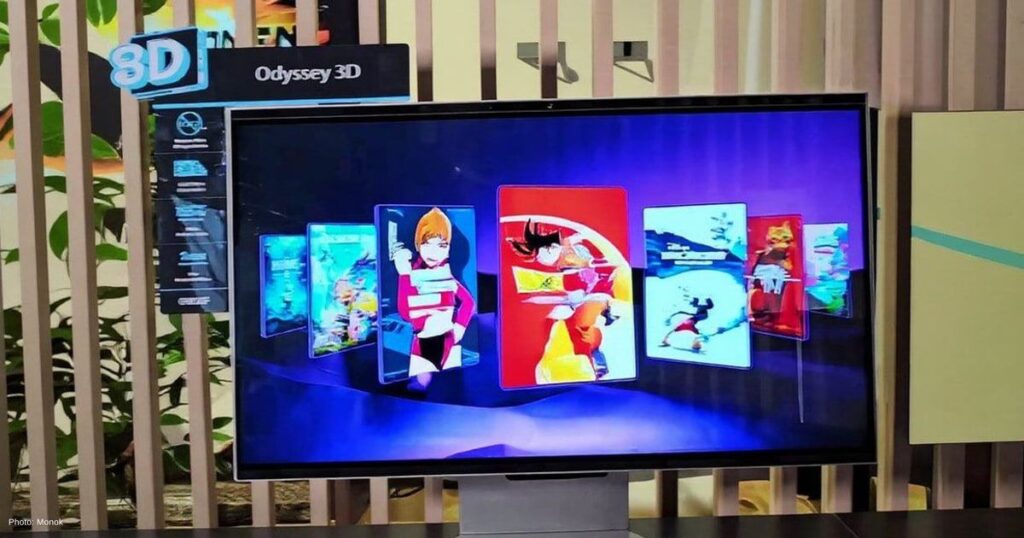
That process brings displays closer to game development itself. Samsung and Activision worked together on HDR10+ GAMING support for Call of Duty: Modern Warfare 4, while Odyssey 3D is adding support for Cyberpunk 2077 and Cronos: The New Dawn.
Such partnerships show how gaming industry innovations are becoming increasingly tied to both hardware and software. As game development takes advantage of new display technologies, monitor makers have more opportunities to differentiate their products beyond basic specifications.
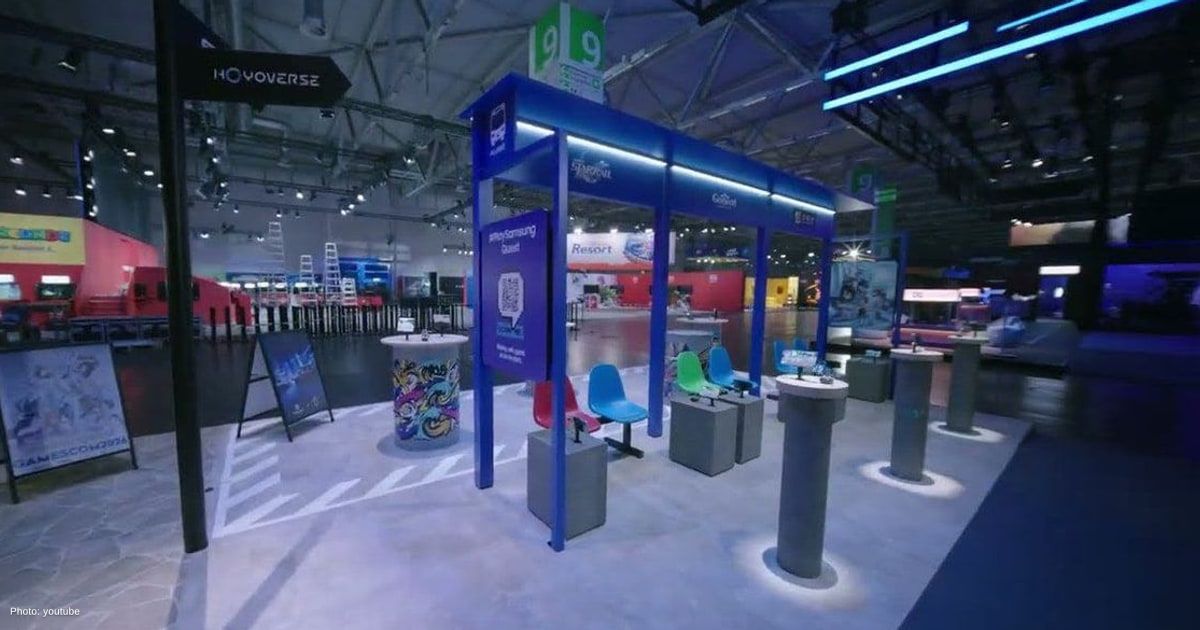
Pricing for Samsung’s new Odyssey models has not been announced. All four are being displayed at Gamescom 2026 in Cologne through August 30, with the G6 planned for a global launch in the second half of 2026.

Marcus Kade
Marcus Kade is Managing Editor at Spiel Times, covering breaking gaming news with a focus on the industry's business side. When not writing, he's probably losing a co-op game to his partner.
View all articlesRelated Articles
View All
Meta’s New VR Glasses Take On Apple Vision Pro With Lighter Design
Meta is pushing mixed reality into a new phase with VR Glasses designed around one of the industry’s biggest challenges:...

GIGABYTE Radeon RX 9070 Buyers Can Get Onimusha: Way of the Sword Free
GIGABYTE is giving PC players an extra reason to consider an AMD-powered upgrade this month. The hardware maker has teamed...
Cyberpunk 2077 Fuels Samsung’s Next Era of Immersive Gaming Displays
Cyberpunk 2077’s neon-filled world is becoming a showcase for Samsung’s push toward the next generation of gaming visuals. Through its...