
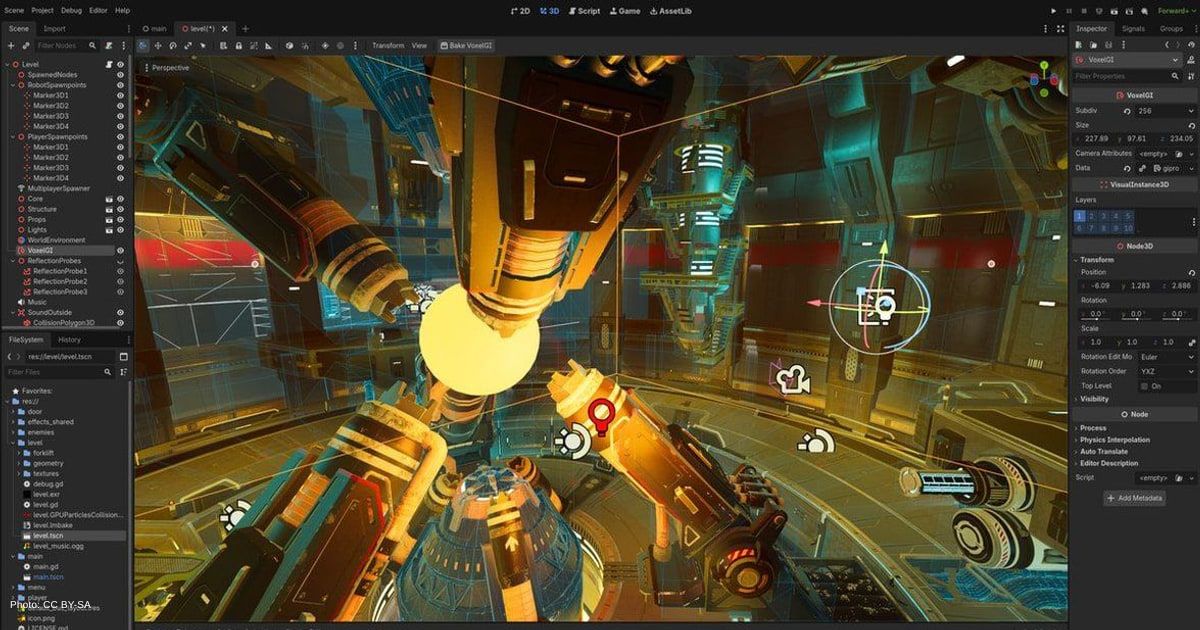
Godot Tops Unity at GMTK Game Jam as Indie Dev Tools Begin Shifting
The indie engine race has a new headline. At GMTK Game Jam 2026, Godot became the most-used engine among submissions, moving ahead of Unity after years of Unity leadership. The result does not erase Unity’s global role. Still, it turns one creative weekend into a wider signal for game development and future tool choice, showing how quickly developer attention can shift when tools feel open, fast, and approachable.
Godot’s GMTK win signals a bigger Indie tool shift
GMTK Game Jam has become more than a community challenge. It is a live stress test for engines, workflows, and creator habits, because participants must turn ideas into playable games under tight deadlines. In 2026, Godot led the engine list with 47% of submissions, while Unity followed with 34%.
That result matters because Unity had held the top position at the event for nine straight years. Godot’s rise was also gradual, not accidental, climbing strongly across recent GMTK editions as more creators became comfortable building and exporting projects with the open-source engine.
Even with that momentum, the numbers should not be treated as a full industry takeover. They are specific to one major game jam. Still, for indie-focused gaming communities, the shift gives publishers, students, hobbyists, and studios reason to study how behavior is changing.
Why Godot is winning indie attention
Godot’s appeal begins with access. The engine is free, open-source, and built for many kinds of 2D and 3D projects, making it attractive to creators who want to test ideas without heavy financial pressure. In an industry where tool choices can affect budgets, schedules, and risk, that matters.
That accessibility fits the pressure of game jams. Developers need an editor that supports quick iteration, clear workflows, and smooth exporting when a small idea has to become playable in days. Godot’s stronger GMTK presence suggests many creators see it as a practical engine for fast experimentation, not just a niche alternative.
Outside GMTK, the same pattern is beginning to connect with wider entertainment and gaming trends. Godot’s own 2026 growth reporting points to rising activity across downloads, Steam, Google Play, and itch.io, although the foundation has also cautioned that open-source tracking can be messy. That balance is important. Unity remains powerful across mobile, education, enterprise, and broader professional pipelines. Godot’s current win is a milestone, not a final verdict on game development across today’s evolving global market.
What this shift could mean next
The bigger outlook is not that one engine has permanently defeated another. Gaming trends are being shaped by creators who value trust, flexibility, and faster paths from idea to playable build. Many future studios begin in jams, classrooms, and weekend prototypes.
For those following the latest game releases and indie production, Godot’s GMTK lead is worth attention. It points to a healthier tool landscape where developers have more credible choices. Unity remains significant, but Godot has earned a serious place in modern creation. For indie teams, that momentum can turn small experiments into stronger projects, wider opportunities, and the next wave of growth in game development.

Marcus Kade
Marcus Kade is Managing Editor at Spiel Times, covering breaking gaming news with a focus on the industry's business side. When not writing, he's probably losing a co-op game to his partner.
View all articlesRelated Articles
View All
Blizzard Is Giving Classic WoW a Massive Makeover With WoW: Forever
World of Warcraft: Forever is taking old-school Azeroth and giving it a serious shake-up. Blizzard is not simply bringing back...

GTA VI’s 2026 Launch Shows the Scale Behind Rockstar’s Grand Vision
Rockstar Games’ next chapter is approaching, and Grand Theft Auto VI is driving up to be more than another major...
Unity Brings Claude Code Support Closer to Smarter Game Development
Unity is advancing its AI-assisted development strategy with official Claude Code support, creating new possibilities for how developers approach game...