
Why Video Game Ladders Are Far More Complex to Build Than They Look
A ladder appears to be one of gaming’s simplest objects: approach, grab, climb, continue. Behind that brief action, however, lies a network of decisions involving animation, positioning, collision, controls, level design, and player expectations. That hidden workload makes ladders a revealing example of game development, in which several disciplines must work together so smoothly that players never notice the complexity that supports one of interactive entertainment’s most familiar movements.
Key Takeaways
The seemingly simple act of climbing a ladder in video games involves a complex interplay of development disciplines that must function seamlessly to create an intuitive player experience.
- Building functional ladders requires intricate coordination between programmers, animators, designers, and artists to handle everything from precise character positioning and animation to collision detection and player controls.
- Beyond technical implementation, game designers must use visual cues like lighting, contrast, and shape to clearly indicate which ladders are interactive, guiding players and maintaining game flow.
- The complexity of ladders extends to their creative use as gameplay tools and social features, and even after release, ongoing updates are often necessary to fix subtle bugs and improve their reliability.
Every rung connects multiple development systems
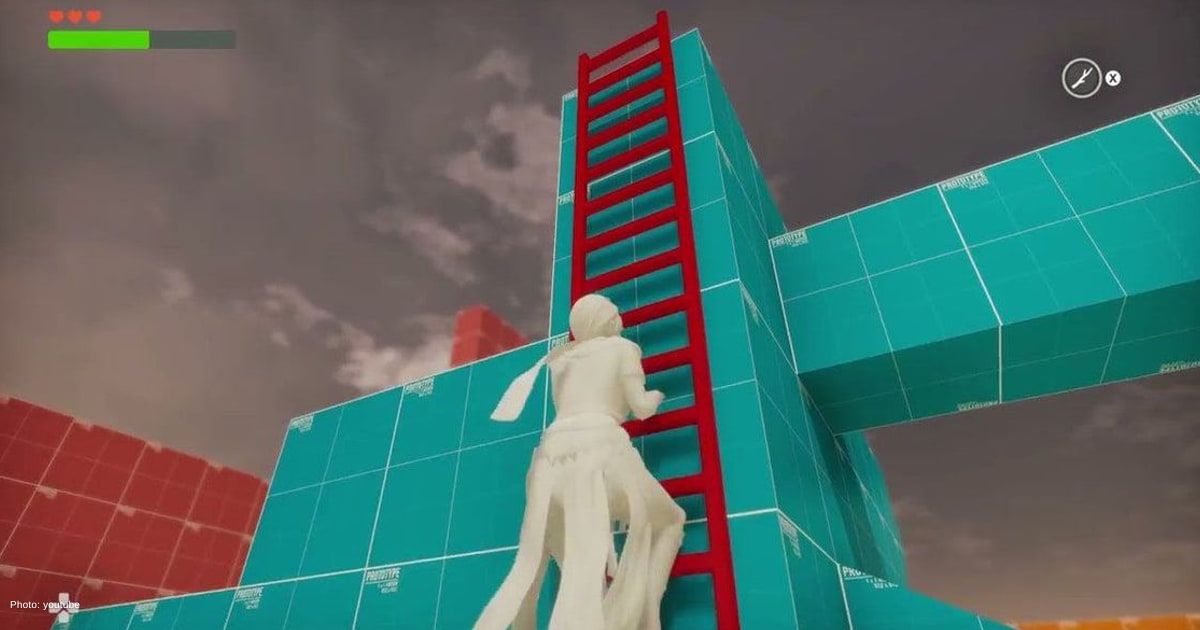
The challenge begins with alignment. A character must detect the ladder, move toward it, face the direction, and enter a climbing animation without snapping into place. Developers can use engine tools for root motion and motion warping, but those tools still require careful setup and testing.
Once climbing works, additional choices widen the problem. A game may need rules for jumping away, reversing direction, taking damage, carrying objects, using weapons, or meeting another character at the top. As gaming trends favor larger and more responsive worlds, multiplayer synchronization, environmental complexity, clipping, and collision can create even more situations for developers to test.
These complications explain Arkane Austin’s memorable design-value poster, “Fuck ladders.” Harvey Smith shared it among the principles linked to Dishonored and Prey. The joke captured how a single traversal object can involve programmers, animators, designers, artists, and testers before it feels ordinary.
Ladders can guide, connect, or betray players
Technical reliability is only half the assignment. Players must also recognize which ladders are usable, where to start climbing, and where the route leads. In visually dense environments, lighting, contrast, consistent shapes, and placement can separate an interactive ladder from decorative scenery. Clear visual language protects momentum because players spend less time testing objects that were never meant to support movement.
Once a ladder is readable and dependable, developers can turn it into more than a basic route. Death Stranding uses portable ladders as tools for crossing difficult terrain, while its Social Strand System allows structures placed by one player to appear in another player’s world. A familiar object, therefore, supports planning, asynchronous cooperation, and a quiet sense of shared progress.
Creative uses do not remove technical risks, however. ARC Raiders’ February 24, 2026, update fixed distorted climbing animation after players reattached to ladders. Its March 31 update required characters to drop carried objects when grabbing ladders or ziplines. Most recently, the April 28 update fixed several trench ladders that could unexpectedly launch players high into the air. These continuing corrections show how a seemingly simple traversal mechanic can remain active engineering work long after launch.
Small interactions build believable game worlds
The ladder’s takeaway reaches far beyond climbing. Believable games depend on teams giving ordinary interactions the same care as headline features. When controls respond consistently, animations remain readable, and transitions feel natural, players rarely notice the machinery underneath. They simply trust the world, and earning that trust is one of game development’s quietest achievements.
As games become larger, more connected, and more responsive, small mechanics will carry even greater importance. Better tools may reduce technical friction, but thoughtful testing, collaboration, and iteration will continue to drive progress. The latest game releases may attract attention through spectacle, yet lasting growth often begins with details players barely notice: one clearer cue, one smoother transition, and one carefully improved rung leading toward better worlds.

John Micheal Agustin
John Micheal (sometimes called JM or Mike) has been writing various types of professional articles for almost 2 years now. He is an avid sports fan and has been following the NBA since the early 2000s. He also loves playing a lot of video games like DotA 2, Valorant, but MMOs have a special place in JM's heart. Not only is he a huge fan of basketball and video games, he also loves movies and tv shows. He is a huge MARVEL and MCU fan plus he is into a lot of superhero stuff.
View all articlesRelated Articles
View All
Amelia’s Escape Delivers Clever VR Puzzles, but the Ending Comes Too Soon
Virtual reality and escape rooms have always been a natural combination, giving players physical spaces where almost everything could hide...

NBA 2K27 Debuts NVIDIA DLSS 5 With AI-Enhanced Realistic Graphics
NBA 2K27 is set to introduce a new chapter in gaming visuals as NVIDIA’s DLSS 5 arrives with 3D-Guided Neural...
Mobile Gaming Gears Up for a Busy September 2026 Release Lineup
September 2026 is shaping up to be an exciting month for mobile gaming, with new titles bringing fresh worlds, competitive...